

We provide case consultations, medical respite (short-term post-hospital housing), and permanent housing to persons experiencing homelessness in Durham with acute or chronic medical issues
Medical respite
Short term housing that provides a safe place to rest and recover in a clean bedroom and bathroom, including the option for home health services (when needed and available). Persons must be able to live independently (including all ADLs and IADLs) and be willing to comply with rules of the facility. We do not operate an independent facility; we contract for placement frequently with transitional/shared housing in Durham. Sometimes these are locations that require sobriety from alcohol and street drugs.
While in medical respite, we provide in person case management with a focus on healthcare (primary care, specialty care, mental health/substance abuse care), maximizing access to supportive services and public benefits, and referrals to housing opportunities.
We only accept referrals from local clinics, hospitals or health systems, crisis centers, and emergency and jail medical staff. To refer, please submit information via this secure form, and someone will be in touch within 24-48 hours (Monday–Friday).
If someone is not appropriate for, or declines, medical respite, we provide case consultations.
Case consultations
Available to professionals with a medical concern regarding a person experiencing homelessness impacting hospital discharge or health care services. We provide expert advice regarding appropriate resources for safe hospital discharge or outpatient care.
Refer via this secure form.
Housing
We operate two longer term housing programs – rapid rehousing and permanent supportive housing. Referrals for both programs come through Durham’s Continuum of Care. Visit Entry Point Durham for more information on how to access shelter and housing resources.
Our Rapid Rehousing program is funded by the City of Durham and provides short-term subsidized rental assistance and support (from one-time assistance up to 2 years). We house 10-12 individuals each year. Our Permanent Supportive Housing program is funded by the U.S. Department of Housing and Urban Development and provides long-term rental assistance and support for chronically homeless individuals with a disabling condition. We house 8-10 individuals each year.
Partnerships
We partner closely with Lincoln Community Health Center Healthcare for the Homeless Clinic, Alliance Health, Resources for Human Development, Open Table Ministry, Urban Ministries of Durham, WellNest, and Duke University Health System in the ongoing operations of this program.
Our work is currently made possible by financial support from Duke University Health System, Durham County Department of Public Health, the City of Durham, U.S. Department of Housing and Urban Development, Durham County ABC, and individual donors.
We developed this program with financial support from the Partnership for a Healthy Durham, the Rita & Alex Hillman Foundation and the Kate B. Reynolds Charitable Trust.
What we’ve accomplished so far:
78 homeless persons have benefited from case consultations
49 received medical respite (short-term housing after hospital stay)
88 enrolled for case management and connected to health care and medications
23 gained disability income & 27 enrolled in Medicaid
53 improved their housing (including 23 who signed leases!)
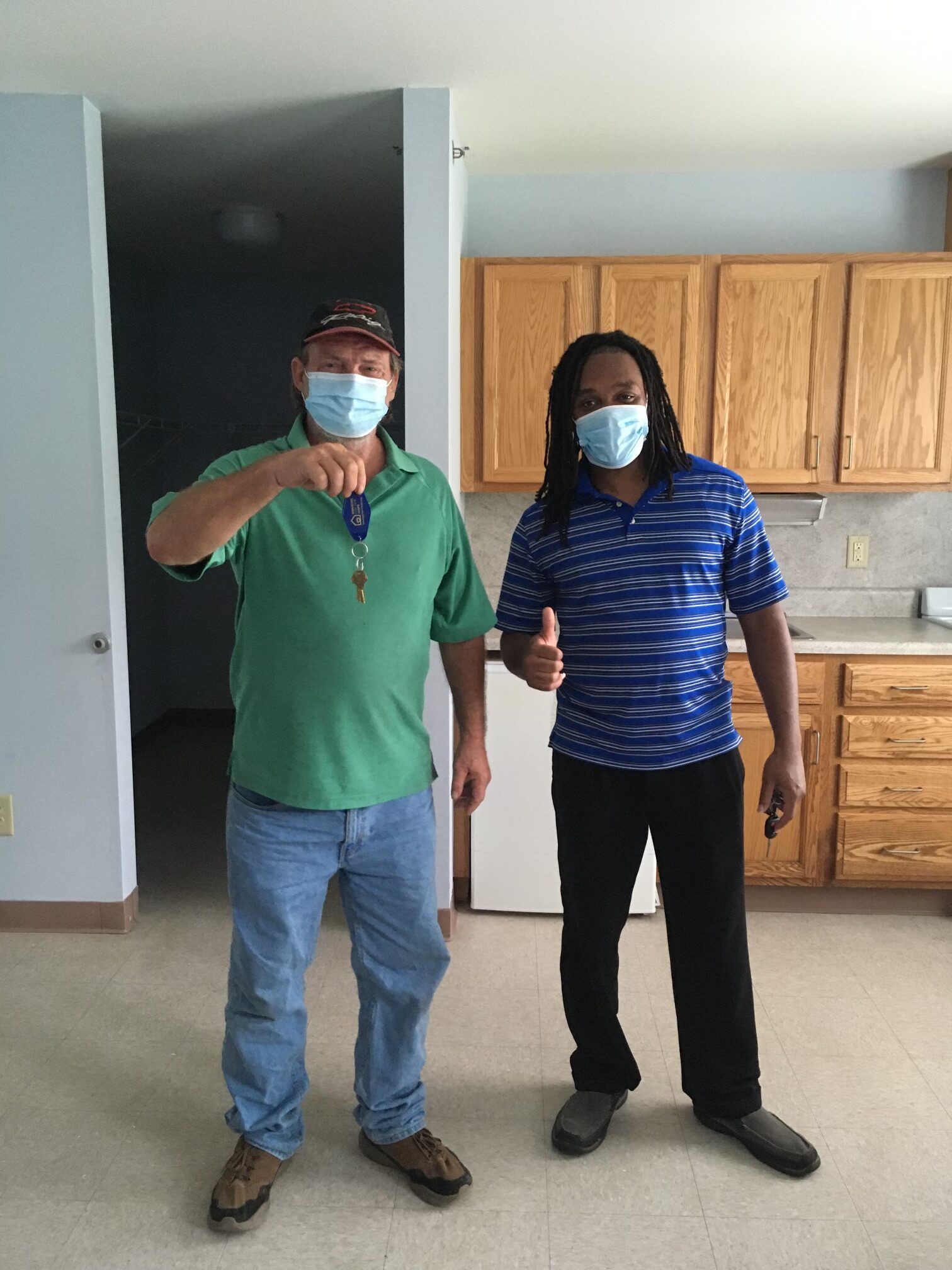
Jeffrey (left) in his new home with Housing Specialist Phillip.
Leadership & Staff
Julia Gamble, NP, MPH, Duke Outpatient Clinic, Clinical Director
Donna Biederman, DrPH, RN, Duke University School of Nursing, Evaluation & Education Director
Laura Alcorn, RN, Nurse Case Manager
Elizabeth Petzold, Housing Case Manager
For more information, call 919.452.8366.
Refer today via this secure form